Two fishermen, two days
One sheet for two days on a big reservoir in the Columbia Basin, a number on neither day, and a reason. The water read against a thermometer twice, a method the sheet never listed, and a largemouth trip that became three species.
What the engine said
One sheet for both days, and a number on neither. The engine builds its score from several readings, and for this reservoir it could work out three of them, the weather, the time of year by WDFW’s calendar, and how hard the days would be on you, and could not read the ones that say whether the fish are there, how the water produces, how easy it is to get on, and how crowded it would be. With that much unread, a score could land anywhere from Wait to the top tier and would tell you nothing, so the sheet gave what could be read and said plainly what it could not see.
The sheet went out on Thursday night, in the new format: facts, then actions, with the reasoning kept in the engine notes. It covered Friday and Saturday, first light to late morning and the late afternoon to dark, by boat, for largemouth bass. It carried the rules for largemouth and for no other fish.
What it was reading
Friday and Saturday, by boat. The forecast was sunny both days, highs near 72 F and 74 F, wind under 8 mph, no rain, and the engine’s reading of the weather was nine of ten on each. Largemouth are open all year here under the statewide rule: no minimum size, keep only largemouth under 12 inches plus at most one over 17, release every fish between, five a day. The water temperature the engine had was a long-term typical value for the dates, about 64.6 F on Friday and 64.2 F on Saturday, from a modelled daily record that ends in 2020, with a stated error of about 4 F; it had no reading for this year. The days on you: easy ones, mild and under five hours a session, with the launch unknown because none was named. The methods were the first three the equipment matrix holds for largemouth, a Texas rig, a Carolina rig and a drop shot, none of them chosen for the conditions, because no sourced row fitted a reservoir at that temperature in October.
What the engine could not see, on both days: whether the fish were there and how well the water produces (no catch report covers largemouth here), what the fish were doing at that temperature (the largemouth rules name six states and give a usable condition for none), which launch, and how crowded the water would be.
Scoring the call
No tier, so no tier to judge. The tier table only runs when a tier was issued and could have been wrong. What can be judged is each thing the sheet did say, against what the records hold:
- The weather as read against the weather as met. Calm and dry both days, as forecast; minimal wind on both.
- The days on you. The sheet said easy days. Friday ran from before seven to mid-afternoon; Saturday from half past six, in the dark and low-fifties air, through to the evening with a break for lunch.
- The long-term water temperature against the thermometer. The engine had about 64.6 F and 64.2 F, give or take about 4 F. The water read 65 F on Friday and 62.5 to 64.5 F on Saturday. Both inside the stated error, and both close to the typical value: two reservoir days the model held.
- The method. The sheet’s three methods were the matrix’s first three, none chosen for the conditions. What caught nearly every fish was a Ned rig, black and blue on Friday and green pumpkin on Saturday, cast shallow and dragged down the slope into 15 to 25 feet, with a few on poppers, a swim jig and a drop shot. That is the third time a Ned rig has caught the day on a Columbia Basin water when the sheet listed none: the sourced rows carry no Ned rig for largemouth, and a method the sources do not hold is never written. It is now a finding on the register, not a note.
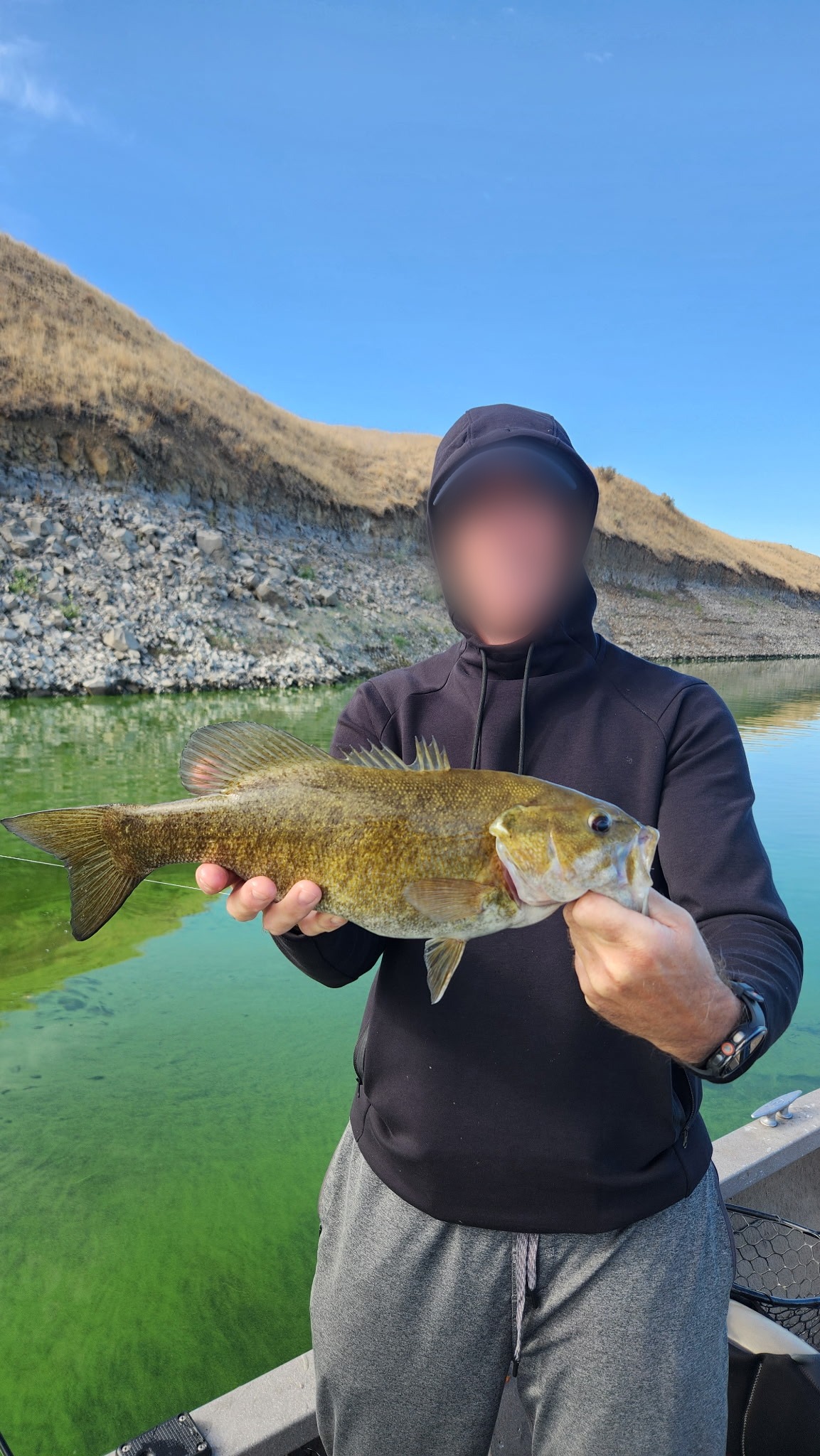
- The species. The sheet scored largemouth and carried its rules alone. Smallmouth were about two thirds of the catch on Friday and about four fifths on Saturday, and five walleye came on Saturday. A sheet should carry the rules for the fish likely to turn up on the same water with the same methods; which fish those are is a sourced question, never a guess. That is a change to what a sheet says, so it is built only on MD’s word, and it is filed.
- The slot rule worked as written. Most of the largemouth fell inside the protected slot and went back; every bass went back on both days.
- When. The engine had no time-of-day source for this water and printed no When section. The records say most of Friday’s fish came between seven and half past eight, and about three quarters of Saturday’s in the first three hours. The same shape held on two lowland-lake mornings the same weekend. All four mornings were calm, so the finding is limited to calm conditions until a windy morning is reported, and it needs a qualifying source before it becomes a line on a sheet.
- The crowd. The sheet asked how crowded the water was. Friday’s answer was that other boats’ catch was not reported. Saturday’s answer was not one of the sheet’s four words, so the crowding field stays blank and the record keeps the words as reported.
DH and TA went to a big reservoir in the Columbia Basin with a plan to fish for largemouth bass. Two days later, I think what they brought back was something more useful than simply proving whether the plan worked.
They brought back a picture of two fishermen willing to let the lake tell them what was actually happening.
The original idea was pretty straightforward: fish the productive windows around first light and evening, work likely largemouth water, and use proven bass presentations. But fishing rarely respects the neat categories we put on paper. This lake certainly didn’t.
By the end of the second day, DH and TA had caught close to a hundred fish, more than sixty of them on the second day alone. Most were smallmouth, a good number were largemouth, and five walleye joined the mix. A trip labeled “largemouth bass” had turned into a lesson about the fishery itself.
What stands out to me is how little they seemed interested in forcing the original expectation.
The Ned rig was producing, so they kept fishing it. Black and blue worked the first day; green pumpkin carried the load the second. They tried poppers, a swim jig and a drop shot, but they didn’t abandon what the fish were clearly telling them. They cast shallow, dragged the bait down the slope into fifteen to twenty-five feet of water, and kept putting fish in the boat.
That sounds simple after the fact. It usually isn’t.
There is a temptation in fishing to prove that the lure you brought, the spot you picked, or the theory you believed before launching was correct. Sometimes the harder lesson is admitting that the lake gets the final vote.
DH and TA did that for two days.
They also reinforced something that keeps appearing in these trips: morning matters. On the second day roughly three quarters of their fish came during the first three hours. The first day’s best window was also early. They were on the water while it was still dark, in low-fifty-degree air, instead of arriving after breakfast and wondering where the bite went.
There was even a significant planned pressure event on the water the second day. More boats, more fishing pressure and plenty of reasons to believe the day might be tougher. Yet they stayed with what they had learned and kept catching fish.
That’s probably what I like most about these two days.
It wasn’t really about DH and TA finding some secret lure or discovering a magic spot. It was about two fishermen paying attention. They noticed temperature. They noticed depth. They noticed timing. They changed color when it made sense, experimented without abandoning what was working, and allowed a largemouth trip to become a smallmouth, largemouth and walleye trip without treating that as some kind of failure.
There is a difference between following a fishing plan and understanding why the plan exists.
A plan gets you onto the water with a place to start.
Fishing teaches you what to do next.
Over those two days, DH and TA did exactly what good fishermen eventually learn to do: show up early, pay attention, quit arguing with the fish, and adjust accordingly.
The numbers were impressive.
The better result was everything they learned while catching them.
A planning aid, not a prediction of catch and not a safety determination: the score ranks how far the conditions it was given favour the fishing asked about, and the conditions are supplied by a person, not read from a feed. Verify regulations with WDFW. Going out, and getting home, is yours alone.