Two mornings on a lowland lake
Two sheets for the same lowland lake in western Washington, a number on neither, and a reason. The water read against a thermometer, a recent plant against the catch, and a bank that was line to line on Saturday and empty on Sunday.
What the engine said
Two sheets, one for each morning, and a number on neither. The engine builds its score from several readings, and for this lake it could work out three of them, the weather, the time of year by WDFW’s calendar, and how hard the day would be on you, and could not read the ones that say how the lake produces and what the fish are doing. With that much unread, a score could land anywhere from Wait to the top tier and would tell you nothing, so the sheets gave what could be read and said plainly what they could not see.
Saturday’s sheet went out on Friday night, in the new format: facts, then actions, with the reasoning kept in the engine notes. Sunday’s went out on Saturday morning for a day in two parts, the bank at first light and then a small kayak from the same ramp, and was re-issued on Saturday evening after a last read of the weather warnings, which found none.
What it was reading
Saturday, from the bank, first light to mid-morning. The forecast was 49 F at first light and 58 F by 10:30, wind about 3 mph with gusts to 7, no rain, and the engine’s reading of the weather was nine of ten. Rainbow and cutthroat are open all year here under the statewide lake rule: five trout a day, any size, and with bait on the hook every trout you could legally keep counts toward it, kept or released. The water temperature the engine had was a long-term typical value for the date, about 60 F, from a modelled daily record that ends in 2020, with a stated error of about 4 F; it had no reading for this year. The day on you: an easy one, mild and under four hours from a paved access. A recent catchable plant of rainbow, the only one in two months. The access: the public ramp, the only shore access. The methods were sourced ones for the conditions: a worm or egg suspended under a float as WDFW’s spring-and-fall method, a fly on still water, a small jig, and floating dough bait last as WDFW’s summer method. For cutthroat the sheet refused by name: no method guidance on file for these conditions.
Sunday, the same lake, the bank again and then the kayak. Mostly sunny, high near 79 F, wind about 2 mph; first light 06:47. The same rules, the same plant, the same long-term water temperature, and the same shore methods, with trolling or suspended bait in the upper water for the kayak half. The one new line was the Saturday-evening check of the weather warnings: none in force.
What the engine could not see, on both days: how well the lake produces (no catch report covers these species here), where the fish were sitting and what they were doing at that temperature (the rainbow rules map nothing in the band the lake sits in; cutthroat carries no rules at all), how crowded the bank would be, and this year’s water temperature.
Scoring the call
No tier, so no tier to judge. The tier table only runs when a tier was issued and could have been wrong. What can be judged is each thing the sheet did say, against what the records hold:
- The weather as read against the weather as met. Calm, clear and dry both mornings, as forecast; a light breeze at first light on Sunday, enough to ripple the surface.
- The day on you. The sheet said an easy day. Saturday ran 06:10 to 09:42 and Sunday 05:30 to 07:59, both from a paved access.
- The long-term water temperature against the thermometer. The engine had about 60 F, give or take about 4 F. The lake read 64 F on Saturday after a warm spell and 62 F on Sunday after a clear, calm night. Both inside the stated error; Saturday’s was close to its edge. The engine notes read the Saturday figure as weather, not a model fault, and the honest statement is that two readings do not settle it.
- The recent plant against the catch. It fished like a freshly stocked lake. The fish that came to hand on both mornings were the size WDFW’s record gives for that plant, and two smaller ones on Sunday were fish the record cannot attribute. The plant said the fish were put in; it never said where they were or that they would bite. One sheet improvement came out of it: print the plant’s fish size, which WDFW records, beside the plant.
- The method. The sheet’s first method was bait suspended under a float. What caught every fish was the same bait floated up off the bottom instead, by a sliding-sinker rig with air injected into the bait. Same water column, different rig: a near miss the sourced rows did not cover, and a worm alone or a dough bait later in the morning caught nothing.
- When. The engine had no time-of-day source for this lake and printed no When section. The records say the fish came between 06:45 and 07:40 on both mornings, first light about 06:46, and nothing for anyone after about 08:15, on calm, very clear water both days. That is a candidate the engine does not yet carry, light and clarity rather than temperature, and it needs a qualifying source before it becomes a line on a sheet.
- The crowd. The sheet asked how crowded the bank was. Saturday, line to line at the only shore access, and everyone catching; Sunday, nobody else on the bank and one boat out. Same lake, same plant, same hour, a day apart. That pair is the first real calibration the engine’s crowding reading has.
There is something useful about fishing the same water two mornings in a row. The lake may look the same, but you don’t.
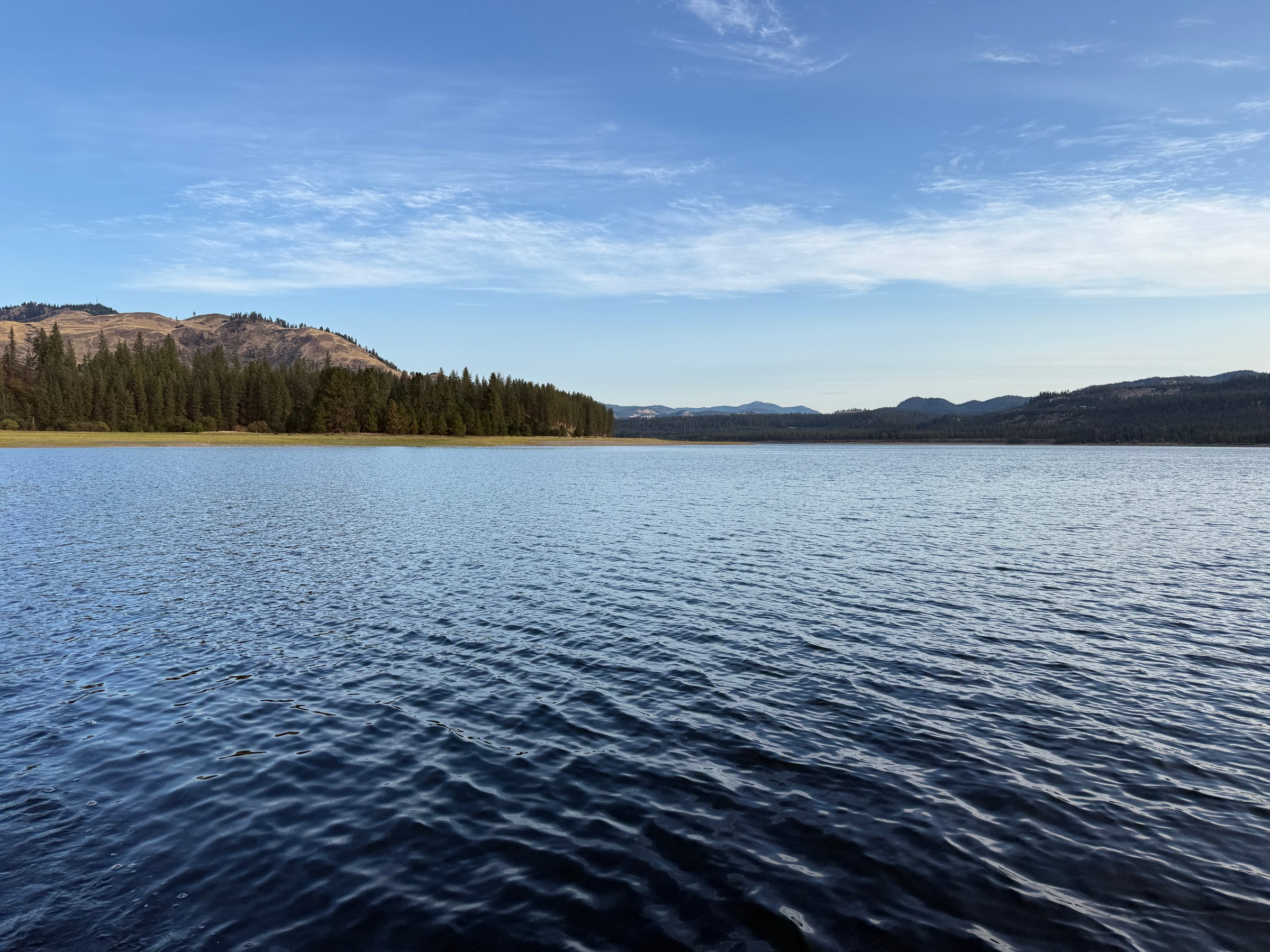
Saturday morning I was on a lowland lake in western Washington at 6:10, with two rods fishing by 6:30. Four other anglers were already working the bank around the launch. The lake was perfectly still, the water was clear, and at 64 degrees it still carried a little of summer with it.
Both rods started the same way: Carolina rigs, a #2 circle hook, 3/8-ounce weight, two garlic eggs and half a nightcrawler. I injected the worm with a little air to keep the bait floating above the weeds.
It worked.
The first trout came at 6:45. By 7:20 I had three, and another followed at 7:40. More importantly, everybody around me was catching fish.
Then somebody flipped the switch.
By about 8:15 the lake went quiet. Not just for me, for everyone. I experimented, changing one rod to straight worms and the other to orange glitter PowerBait, but nothing brought the bite back. I finally packed up at 9:42.
The lesson seemed pretty obvious: be there early.
So Sunday I was.
I arrived at 5:30, early enough to claim the exact piece of bank I wanted. Same lake. Same two rods. Same starting rigs. But this time there wasn’t another shore angler anywhere around me.
At 6:00, a ten-inch bullhead volunteered to start the morning and went back into the lake. One boat launched with three guys aboard. Otherwise, the lake was quiet.
The water had cooled to 62 degrees overnight and remained remarkably clear. The sky was clear with part of the moon still showing. There wasn’t enough wind to disturb the surface until first light, when a faint breeze finally put a ripple across the lake.
Both mornings’ temperatures came from a simple pool thermometer.
Then, at 6:50, chaos.
Three trout in about ten minutes.
Another came at 7:30 and the last at 7:40.
At 7:59, with my limit of five, three of them 15 to 17 inches, I was done.
The plan had been to switch to the kayak once the bank went quiet. With a limit by 7:40, it never came off the truck.
Two mornings on the same lake, using essentially the same presentation, produced almost the same lesson. The productive window wasn’t long. On Saturday, staying until nearly ten didn’t buy me much. On Sunday, arriving earlier did.
That’s one of the things I like about fishing consecutive days. The first day gives you information. The second gives you a chance to see whether you actually learned anything from it.
Sometimes becoming a better fisherman isn’t about finding a better lure.
Sometimes it’s just knowing when to set the alarm.
A planning aid, not a prediction of catch and not a safety determination: the score ranks how far the conditions it was given favour the fishing asked about, and the conditions are supplied by a person, not read from a feed. Verify regulations with WDFW. Going out, and getting home, is yours alone.