Learning to Fish the Seasons
Fishing has taught me to notice seasons. Getting older has taught me to feel them.
When you’re young, tomorrow is a long way away. A week can feel enormous. Summer seems like it might last forever, and Christmas takes approximately three years to arrive. If someone tells you something is going to happen next month, they might as well be describing another lifetime.
Time is compressed when you’re young. Everything important is happening now.
I don’t remember exactly when that changed. I just know it did.
At some point the weeks started moving faster. Then the months. Eventually you catch yourself saying something happened “a couple of years ago” and realize it was closer to ten.
I’ve been thinking about that lately. Probably because I’m a fisherman.
Fishing has taught me to notice seasons.
Getting older has taught me to feel them.
When Saturday Was Enough
I don’t remember thinking much about fishing seasons when I first learned to fish. My grandfather took me fishing. That was enough.
The important question wasn’t what the water temperature had been doing for the last three weeks, or where a particular species should be in its annual migration. It was: Are we going fishing? And more importantly: When?
Saturday mattered. Next Saturday was almost too far away to consider.
That’s how much of life feels when you’re young. Everything exists close to you: the thing you want, the thing you’re afraid of, the person you’re angry with, the thing you can’t wait to do. The disappointment you’re convinced will never go away. The happiness you’re equally convinced will last forever.
You haven’t lived through enough seasons yet to know differently. So everything feels permanent, even though almost nothing is.
Spend enough years fishing and something changes. You stop seeing individual days. You start seeing what surrounds them.
A warm day in March isn’t just a warm day. It’s the beginning of something. Water temperatures start climbing. Days get longer. Fish move. Things that have been quiet begin to wake up. Spring doesn’t arrive all at once. It announces itself in pieces.
Then comes summer, and everything expands: long days, warm water, more places to go, more things to chase. You try to fit everything in. Salmon, walleye, bass, tuna. Camping. The ocean, the river, the lake. There is never enough time.
Summer has an urgency to it. I’ve noticed life does too.
There are seasons of life when everything seems to demand something from you. Career, marriage, children, mortgages, bills, promotions, projects, schedules, responsibilities, people depending on you. You wake up and there is something that needs to be done. Then another thing. Then another.
There is joy in those years, a tremendous amount of it. But there is labor too. You are building something: a career, a family, a home, a life. You don’t always recognize it while you’re inside it, because you’re too busy doing the work.
Summer is like that. Everything is growing. Everything needs attention. And daylight makes you believe there’s enough time to get one more thing done.
There usually isn’t. But you try anyway.
One of the things fishing eventually teaches you is that wanting something doesn’t make it available. I can want to catch a particular fish as badly as I like. That doesn’t mean it’s the right time.
Fish move. Runs begin and runs end. Water warms and cools. Rivers rise and fall. The ocean changes. There are windows. Some are long. Some last only a few days. Miss one and you may have to wait until next year.
When I was younger, I think I fought that idea more. I wanted to fish for what I wanted to fish for. Now I’m more interested in what the season is offering.
There is a difference. One is trying to impose your plans on the calendar. The other is paying attention.
I think life asks the same thing from us.
After enough years, you stop expecting yourself to remain exactly the same. There are periods when I have enormous energy. I want to build things, learn things, travel, fish new water, take on another project, solve another problem. Go.
There are other periods when that energy isn’t there. When I’m quieter. When I don’t need another objective. When sitting somewhere and watching the water seems like a perfectly reasonable use of an afternoon.
I used to think one of those versions of myself was better than the other. I’m less convinced of that now.
Energy has seasons. So does ambition, and happiness, and grief, and confidence, and exhaustion. Even joy has an ebb and flow.
When you’re young, a low point can feel permanent because you don’t have enough history to recognize the pattern. Age gives you evidence. You’ve been unhappy before, and it passed. You’ve been uncertain before, and something eventually became clear. You’ve been exhausted before, and you recovered. You’ve had years you wished would end and years you wished you could hold onto. Neither listened. The seasons moved anyway.
There is comfort in knowing that.
Fall
I’ve always liked fall. But I think I understand it differently now.
Fall isn’t summer failing. That’s important.
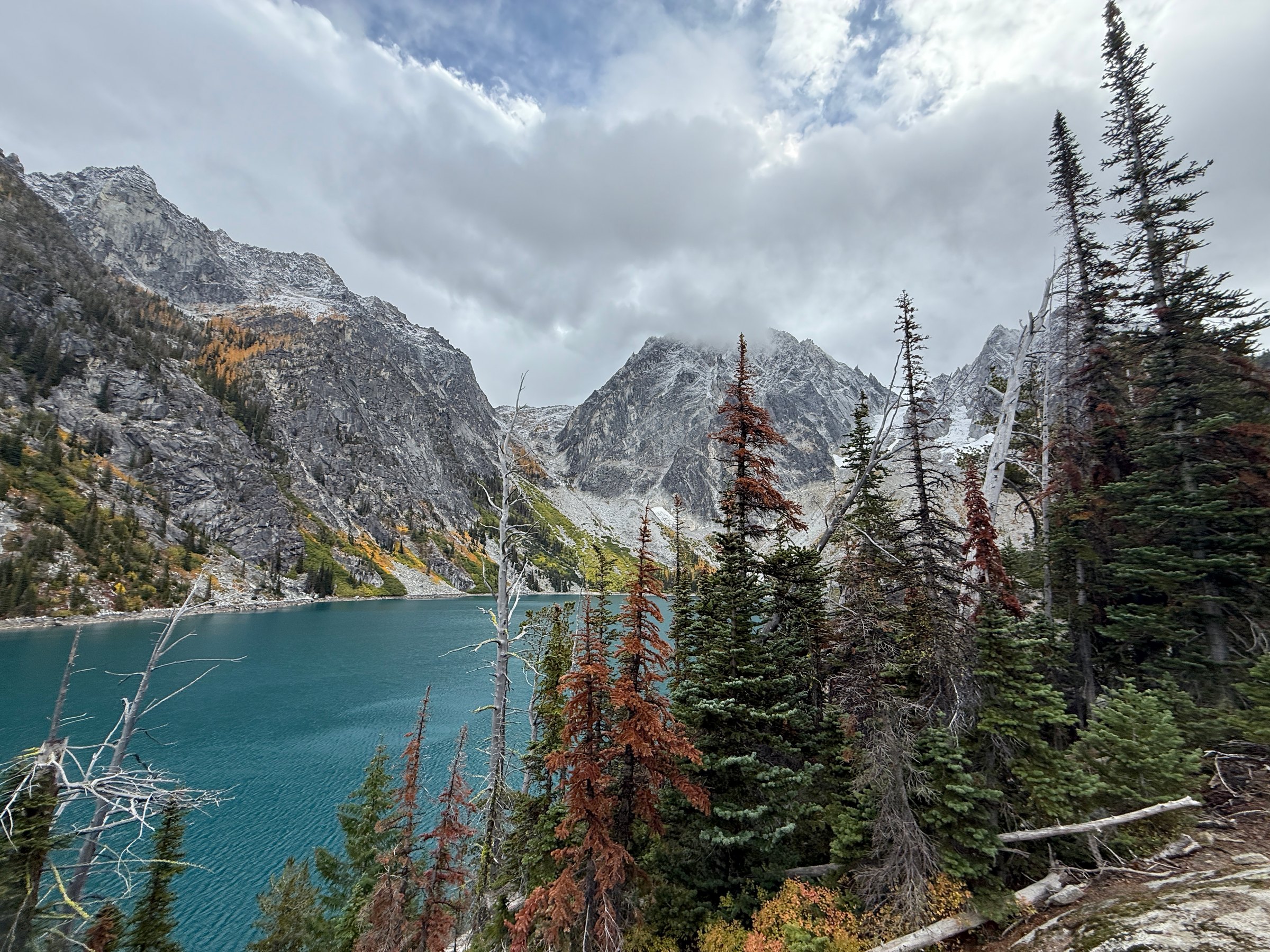
The days shorten. The air changes. The mornings become colder. Leaves turn, the water cools, and things begin slowing down. But none of that feels like failure. It feels like completion.
The upper Columbia River, first light, moving fast over the water to get to that first spot. There is a space between the water and the bottom of the rising mist. Fall smells different: a mixture of pine, fresh air, and leaves with a tinge of color. The feeling is different too, calm and exhilarating at the same time.
You could almost fly.
The frantic growth of summer is over. What grew has grown. What didn’t, didn’t. There isn’t much point arguing about it now. You take stock. You gather what the season produced. You prepare for what’s coming. And maybe, finally, you rest a little.
There is a peace in that. I feel something similar in my own life now.
Not that the work is finished. Far from it. I still have things I want to build, places I want to see, fish I haven’t caught, water I haven’t learned, questions I haven’t answered. But the urgency feels different. I don’t need everything to happen now. That’s new.
The years move faster, but your understanding of time gets larger. Those seem contradictory. They aren’t. When you’re ten, five years is half your life. When you’re older, five years is something you can almost see around, because you’ve watched five-year stretches disappear before.
So tomorrow becomes less important in one way and more important in another. You don’t have to solve everything tomorrow. But you also understand there aren’t an unlimited number of tomorrows. That’s a peculiar kind of freedom. It makes some things matter considerably less, and other things considerably more.
Maybe that’s why fishing has changed for me. I still want to catch fish. Badly. I still study conditions. I still buy too much gear. I still make plans that the river has absolutely no intention of following. I still get frustrated when fish refuse to participate.
But I’m getting better at seeing the day around the fish. Who I’m with. Where I am. What the morning feels like. The first cold air of fall coming across the water. A river I’ve watched change through the year. A trip that didn’t produce what I wanted but somehow gave me something anyway.
When you’re young, you count the fish. Later, maybe you start counting the days. Eventually you realize you probably shouldn’t be counting either one.
You should be there.
Learning the Season You’re In
I don’t know exactly which season of life I’m in. Maybe nobody does while they’re actually living it. We name these things afterward.
But I know I feel the seasons differently than I used to. Not just in the temperature. In my bones, in my energy, in the things I care about, in what I’m willing to chase and what I’m finally willing to let pass.
There was a time when letting something pass felt like losing it. Now I understand that sometimes it simply isn’t your season. Another opportunity comes. Another run arrives. The water changes. Something else begins.
Fishing taught me that long before I understood I was learning it.
Spring doesn’t apologize for not being summer. Fall doesn’t try to become spring again. The river doesn’t mourn the water that has already passed. Everything moves. Everything changes. Everything gets its season.
Maybe growing older isn’t about learning how to hold onto things longer. Maybe it’s learning when to hold on and when to let the current carry something away.
I spent much of my younger life waiting impatiently for whatever came next. Now the years seem to arrive almost before I’m ready for them. And somewhere between those two versions of myself, I’ve started paying attention to the season I’m actually in.
There are still fish to catch and work to do. There are people I want beside me. There are things I want to learn, and things I hope I can pass along.
I want to honor my history, and what I’ve been given: how my grandfather continues to be my mentor, long after he has left this world.
But there is less urgency in it now. More gratitude. More room. More willingness to let a day simply be the day it is.
Maybe that’s fall. If it is, I think I’m beginning to understand why I’ve always loved it.
Not because everything is ending.
Because, for once, nothing seems to be in such a hurry.