Not a Kayak Day
On judgment, limitations, and knowing when to leave the kayak on the truck
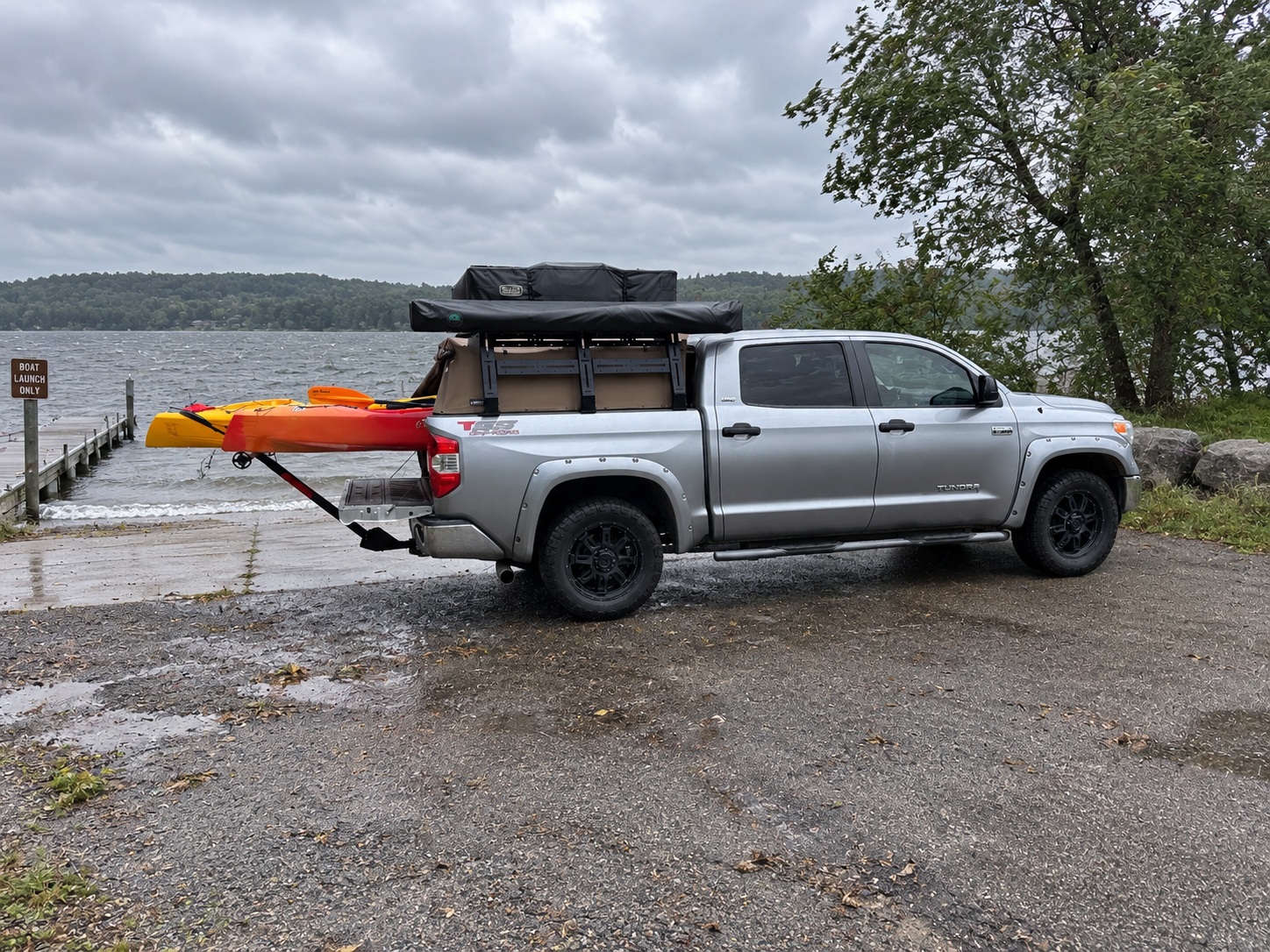
One Friday this October, I drove to a small lake with the kayak on the truck. The forecast I trusted was calling for wind gusts in the twenties. Two other weather apps were predicting something considerably lighter.
When I arrived, the lake looked pretty good. There were a few gusts, but nothing particularly concerning. No whitecaps, and I’ve seen this lake develop whitecaps before.
I stood there for a while, watching the water and trying to decide which forecast to believe. Eventually, I left the kayak on the truck and fished from the bank instead.
As the morning went on, the wind never seemed to develop into what had been predicted. At least not while I was there. I may have missed a perfectly good morning of kayak fishing.
I’ve been thinking about that decision ever since.
The Pacific Northwest Has a Way of Complicating Things
I enjoy fishing from a kayak. There’s something appealing about how little separates you from the water. You’re close enough to notice things you might overlook from a larger craft. You can reach places that are difficult to approach from shore, work along a shoreline quietly, and cover water without the complications of a motor or trailer.
But fishing from a kayak in the Pacific Northwest requires a different kind of attention. The water can be cold even when the air is warm. A calm morning on Hood Canal can become a different experience when the afternoon wind begins moving down its length. A tidal exchange can turn a relatively easy paddle into a long trip home. Some of our coastal waters are connected by narrow passages where current, wind and geography interact in ways that aren’t obvious from the launch.
None of this makes kayaking unreasonable. It means the conditions need to be understood in relation to the person, the equipment and the particular water being fished. A ten-knot wind doesn’t mean the same thing everywhere. Neither does a three-foot swell. And a forecast that looks acceptable for a larger fishing boat may be entirely inappropriate for a kayak.
I’ve learned to be careful about treating numbers as permission.
What the Forecast Doesn’t Know
Before a trip, I can look at predicted wind speed and direction, gusts, tides, currents, water temperature and the expected weather window. I can study charts and identify places where I might have some protection if conditions deteriorate. That’s all useful.
But the forecast doesn’t know how I slept. It doesn’t know whether my shoulder is bothering me, whether I’ve been working too many hours or whether I’m mentally preoccupied with something that has nothing to do with fishing. It doesn’t know how much equipment I’ve loaded or how much harder the kayak might be to manage because of it. And it certainly doesn’t know whether I have the energy to paddle back against conditions that turn out to be worse than expected.
Those aren’t insignificant details.
In a kayak, I’m the motor.
I’m also the person responsible for navigation, fishing, balance, equipment and getting myself home. My physical and mental condition are part of the day’s operating conditions.
There is also a difference between being afraid of something and recognizing that I simply don’t want to do it today. It’s worth knowing which one I’m experiencing. Neither necessarily requires a bad weather forecast to justify the decision.
The Return Trip
I think one of the easiest mistakes to make in a kayak is evaluating the trip from the launch instead of from the farthest point you intend to reach.
Everything looks different when you’re standing beside the water with fresh legs and a full thermos of coffee. The destination might only be a couple of miles away. The wind is at your back. The current is helping. The fishing looks promising. Getting there seems easy enough.
But getting there isn’t the hard part.
Getting back is.
After several hours of paddling, casting, fighting fish, adjusting position and dealing with whatever the weather decides to do, the return can become an entirely different undertaking. A favorable current on the way out may be unfavorable on the way home. A breeze that seemed insignificant in the morning can become a persistent headwind. And the distance that felt manageable at sunrise can feel much longer after a full day on the water.
I try to think about that before launching. Not when I’m already tired. There is a substantial difference between being capable of reaching a fishing spot and being prepared to return from it under less favorable conditions.
The Uncomfortable Decision
I think fishermen are susceptible to talking themselves into things. We’ve already made the drive. The kayak is loaded. The bait is purchased. The equipment is ready. Maybe we’ve been watching this weather window for two weeks. We want to fish. And once enough effort has gone into preparing for something, abandoning it can feel like wasting all that preparation.
That Friday morning was a good example. The forecast I trusted said one thing. Two other forecasts said something else. And the sheet my own engine had built the night before agreed with the first: not a kayak day. Standing at the ramp, I could see that the water was manageable at that moment. I also knew that the conditions I was looking at weren’t necessarily the conditions I’d be paddling through two hours later.
I could have launched.
I had the equipment.
I had a plan.
I was already there.
And I wanted to fish.
But I wasn’t comfortable dismissing the stronger wind forecast simply because the lake looked good when I arrived.
The desire to fish is not evidence that conditions are suitable.
So I left the kayak on the truck. There was no dramatic moment. No sudden gust that made the decision obvious. No whitecaps rolling across the lake to confirm that I’d made the right call. I simply decided not to launch, then spent the morning fishing from shore, occasionally looking at the water and wondering whether I’d been too cautious.
That’s an uncomfortable kind of decision. There was nothing to point at afterward and say, “See? That’s why I stayed off.” Maybe the forecast was wrong. Maybe the stronger wind arrived after I left. Maybe it never arrived at all.
I’ll never know.
Experience Doesn’t Eliminate Risk
I’ve spent enough time outdoors to know that experience is useful. It helps me recognize patterns, anticipate changing conditions and understand my own limitations.
But experience also creates a problem. The more times something works out, the easier it becomes to assume it will work out again. I’ve paddled in stronger wind than this. I’ve handled worse current. I’ve been farther from shore. I’ve made that crossing before. All of those statements might be true. None of them guarantees anything about today.
And there’s a difference between remembering what I’ve managed in the past and understanding what I should attempt now. I don’t want to become so cautious that I stop doing things I enjoy. But I also don’t want familiarity to become an excuse for overlooking something important.
There are conditions where I can operate a kayak safely. There are conditions where I can probably manage it. And there are conditions where I’d rather not find out. Those categories aren’t always separated by a number on a forecast.
There Will Be Another Morning
One of the advantages of living in the Pacific Northwest is the amount of water available to us: lakes, rivers, protected bays, canals and open coastline. There’s almost always somewhere I could fish. But not every location is appropriate for every day, every craft or every version of myself. Some days the kayak makes sense. Other days I’d rather fish from shore. And occasionally I decide that fishing can wait.
A decision can be reasonable without being proven correct afterward.
That’s an important distinction. A calm afternoon doesn’t mean launching would necessarily have been the right choice, just as a difficult afternoon doesn’t automatically mean launching was foolish. We make decisions with the information and capabilities available at the time. Then we live with them.
The Fishability Index Engine I’m building can help tell me when the numbers say not to go. It can’t tell me when to stay home anyway. That part still belongs to me.
Not Today
I suspect I’ll continue having mornings like that Friday. I’ll load the kayak, check the conditions, make the drive and stand beside the water considering the day. Most of the time, I’ll launch. Occasionally, I won’t.
When that happens, I may still feel disappointed. I may question the decision on the drive home. I may even find out later that the fishing was excellent.
That’s fine. I bought the kayak because I enjoy being on the water, not because I owe it a certain number of trips. And I didn’t spend years learning to understand weather, current and water conditions so I could ignore my own condition when making the final decision.
Some mornings the forecast tells me everything I need to know. Other mornings, I have to include myself in the assessment.
The kayak can stay on the truck.
Not every day that I can launch is a day that I should.