The Fish Has Not Been Informed
A score isn’t a promise. A forecast isn’t a contract.
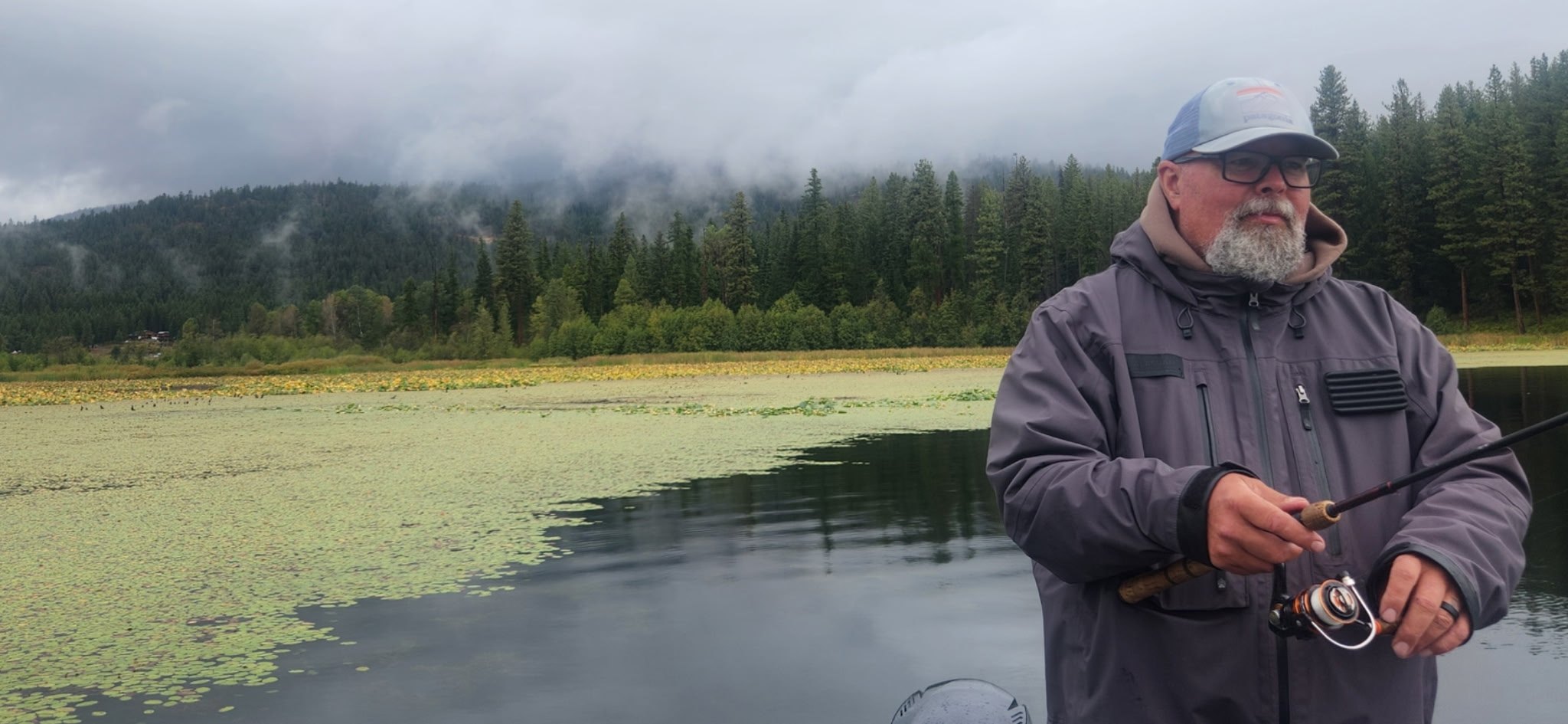
I spend an unreasonable amount of time preparing to fish. Weather, water temperature, river flows, tides, barometric pressure, run timing, catch reports, wind. I look at maps, think about presentations, and bring too much gear. I’ve gone far enough down this road that I built a system to take all of it and answer one question: should I go fishing?
On a Saturday in September the system looked at a beach on Puget Sound and said 76. Go. A man I’d sent the sheet to fished it from first light to eleven and caught nothing while people near him caught coho.
I made two mistakes on that sheet. Only one of them mattered, and it wasn’t the one I could see.
The first I found the next day. The current at that spit turns almost an hour before high water, and I’d drawn his fishing window on high water — so the sheet promised him nearly an hour of flood that had already stopped running. Plainly wrong. It cost him nothing at all. He’d fished his own hours anyway, and the flood had peaked at ten while he was standing in it.
The second took another day and it was the whole thing. The score leaned on a line I’d put in by hand: this water produces, people catch here. That was true and it was also an anecdote. When I finally checked it against ten years of the state’s own catch records, that beach in September came out middling — an ordinary coho water among the state’s coho waters. The number I’d assigned it was nearly twice what the record supports. Corrected, the sheet reads 69. Prepare, not go.
So the visible error was harmless and the invisible one was the whole problem. That’s usually how it goes.
I fixed both. Neither gave him his morning back.
The illusion of control
We spend enormous energy trying to secure outcomes in a world that doesn’t particularly cooperate with the arrangement. Fishing may be the purest demonstration of the problem.
You can do everything right.
Right water. Right temperature. Right time. Right lure. Right depth. Right speed.
Nothing.
Then somebody fifty yards away who appears to be doing everything wrong catches a fish. This is infuriating. It is also fishing.
The longer I do this, the more I see two different things happening every time I go out. There are the things I control: preparation, equipment, location, presentation, effort, attention. And then there is everything else. The weather changes. The river rises. The wind arrives six hours earlier than forecast. The fish move, or they don’t. Some days they bite. Some days they apparently hold a meeting before I arrive and agree not to.
I can influence the odds. I cannot control the outcome. Those are very different things, and knowing the difference has not slowed me down in the slightest.
We still try
If anything I’ve gotten worse. I collect more information now than I ever have, and I want more of it. Better water-temperature data. Better flow data. Better catch history. I want to know why fish were somewhere yesterday and somewhere else today.
I built the Fishability Index Engine because I believe better information produces better decisions. That might look incompatible with accepting uncertainty. I don’t think it is. There’s a difference between preparing for something and believing preparation entitles you to the result.
Fishing teaches that distinction well, and teaches it repeatedly, because the lesson doesn’t stick.
The fish doesn’t know about the score
There is something humbling about assigning a number to a fishing opportunity. You can build a careful model, feed it good data, weight the variables, test it against what actually happened, and improve it over time. Eventually it says: go.
Excellent. The fish has not been informed.
A score isn’t a promise. A forecast isn’t a contract. It’s our best attempt to understand a complicated system before stepping into it, and nature gets the final vote.
What that Saturday taught me is narrower than that and more useful. The part of the score I was most confident about was the part I’d made up. It felt like knowledge because I’d watched it happen — people catch fish on that beach, I’d seen it, everyone knows it. The state had been counting for ten years and the counting said otherwise.
The problem with trying too hard
Almost every fisherman knows this one. You’re not catching fish, so you change something. Then something else. Different lure, different color, different depth. Move the boat. Change speed. Check the electronics. Move again. Another lure. Another spot.
Pretty soon you’re not fishing. You’re fighting the fact that you aren’t catching fish.
I’ve done this more times than I’d like to admit. There’s a point where effort stops being useful and becomes resistance, where the harder you push an afternoon into becoming what you expected, the less you notice what it actually is.
Sometimes the better decision is to change tactics. Sometimes it’s to move. Sometimes it’s to keep doing exactly what you’re doing. And sometimes the answer is that today isn’t your day, which is much harder than changing lures.
Fishing requires participation
Alan Watts used music and dancing to make a point about how we get life backward. The purpose of a song isn’t to reach the last note as efficiently as possible. You don’t dance in order to arrive at a particular place on the floor. The activity is the point.
Fishing has some of that in it. If catching were the whole purpose, we’d have designed a remarkably inefficient way to get dinner. Instead we drive for hours, launch in the dark, stand in rivers, walk beaches, tie knots, lose tackle, watch rods, make casts, and wait. Sometimes for a very long time.
Then occasionally something happens. The rod loads. The line moves. Everything becomes immediate, and for a few seconds there is no tomorrow, no work, no phone, no schedule, no index. There is only what’s happening at the other end of the line.
You aren’t thinking about being present. You simply are.
You can’t hold onto it
Then it ends. Maybe the fish comes in the boat, maybe it comes off. Maybe you take a picture, maybe it becomes dinner. Either way it’s over quickly and you’re fishing again.
That’s the other thing fishing refuses to let you keep. You can have the best day of your life on the water and start over tomorrow at zero. The river doesn’t care what happened yesterday. Neither does the next fish.
There is no permanent achievement in fishing. You never finish it. You never solve it. You just become a little more experienced at participating in something considerably larger than your understanding of it. I like that more than I expected to.
Maybe that’s why we keep going
I’m going to keep trying to make this more predictable. I’ll keep collecting data and improving the engine and checking temperatures and flows and forecasts. I’ll keep making plans.
But the value of the preparation probably isn’t control. It’s getting close enough to the right water at the right time that I can participate in whatever happens next.
Because eventually on every trip there is nothing left to calculate. The boat is in. The rods are out. The water is moving underneath you. You’ve done what you can, and then you wait.
That’s where fishing becomes something else. You stop trying to predict the river. You’re simply on it.
I spend all this effort trying to understand fishing precisely because fishing keeps showing me how much I don’t understand. I don’t want to solve that. I want to keep fishing inside it.
Make your best plan. Then be willing to let the river have its own.