Two Sides of the Same Water
The divide between bank fishermen and boat fishermen.
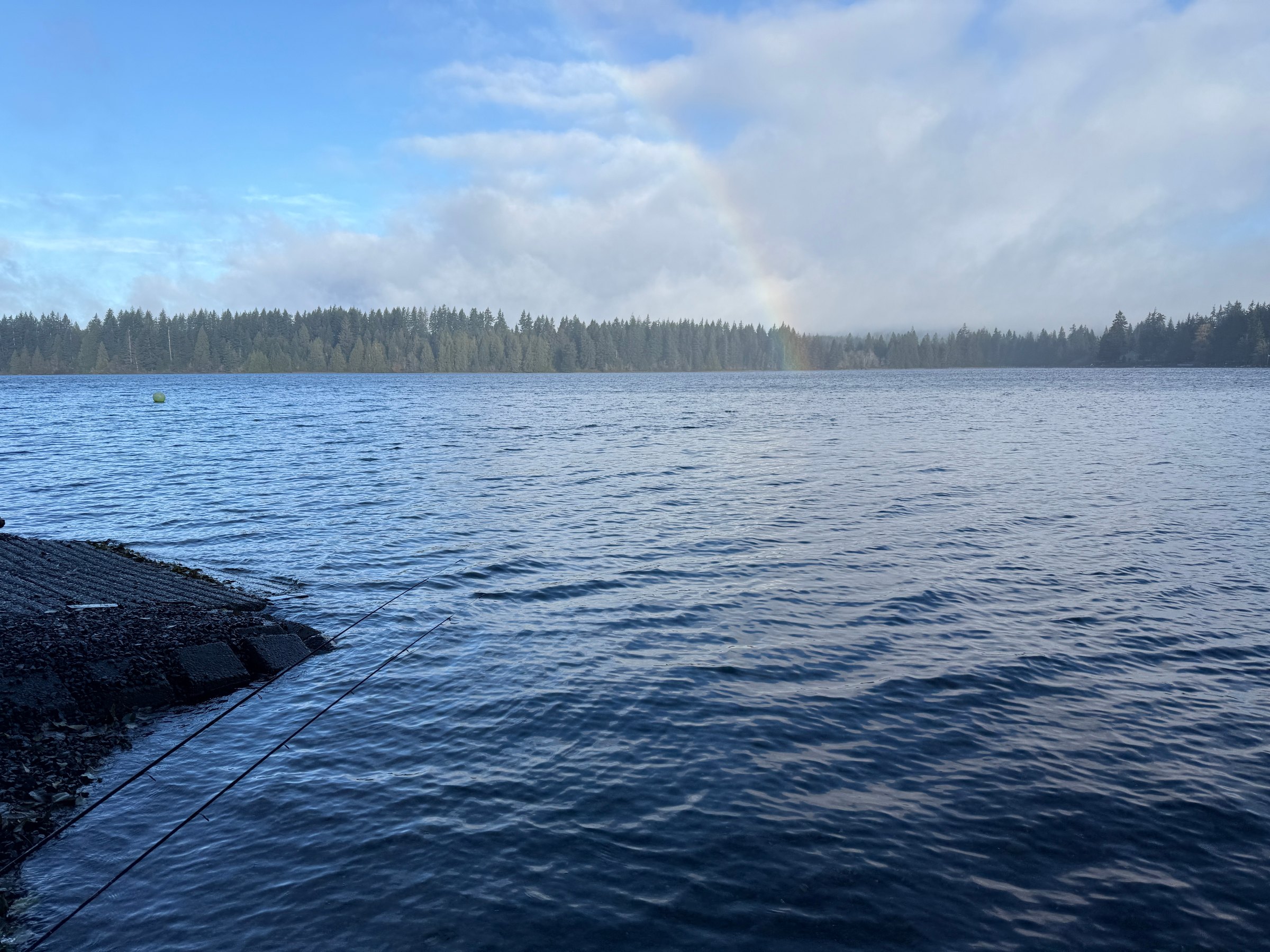
One morning this October, there were eight of us fishing sixty feet of bank, elbow to elbow. It was a small lowland lake with one public ramp, and the ramp was also where we had access to the water. Every time a boat launched, we reeled in and stepped aside.
After 8:20, the bank went quiet. Fifty yards beyond the end of our casts, boats were still trolling through productive water. The fish hadn’t necessarily stopped biting. They were simply somewhere we couldn’t reach.
I stood there thinking about that. I’m a bank fisherman, born and bred. I have boats too, and I’ve had my share of mornings on the water, so I understand the advantages of both, or at least I thought I did. That morning made the difference obvious. The fishermen in those boats could follow the fish. The eight of us on shore had to figure out something else.
That distinction goes considerably deeper than owning a boat.
The Freedom to Move
There’s a particular kind of confidence that comes with launching a boat. You have options. If the fish aren’t shallow, you can move deeper. If the wind changes, you can find another shoreline. If the current isn’t right, you can run upstream. If the fish aren’t where you expected them to be, you can go looking. Electronics tell you what’s underneath you, maps show structure you can’t see, and a trolling motor holds your position while you work a piece of water. You can cover miles in a day. That’s an extraordinary advantage.
But it also creates a temptation. When nothing is happening, you can always move. Sometimes moving is exactly the right decision. Other times, it’s simply easier than admitting you don’t know what to do next. I’ve certainly been guilty of that, and I’ve probably driven a boat away from fish more times than I’d care to know.
Standing on that bank, moving wasn’t much of an option. I could change bait, change depth, change my casting angle, wait, or go home. Meanwhile, the boats could move another fifty yards.
That’s a difference in access. But it’s also a difference in how you learn to fish.
Changing Locations or Changing Understanding
In a boat, I can respond to failure by changing locations. On the bank, I may have to respond by changing my understanding.
The next morning I came back with a heavier weight and a bigger hook. That gave me twenty more yards of reach, and room for a whole worm instead of half of one. I don’t know if that’s why I caught fish. I know it put my bait somewhere it couldn’t reach the day before.
A boat lets you learn through movement. You explore, you search and you compare locations. You find structure, bait and depth, and over time you can build an understanding of an entire lake or a long stretch of river.
Bank fishing often demands something different. You learn through repetition: the same shoreline, the same current seam, the same point, the same stretch of riprap. You notice how a location changes when the water rises six inches. You learn which casting angle reaches the channel, and you recognize when the wind pushes bait toward shore. You discover that a spot that looks completely unremarkable at noon can turn productive just before dark. Not because the spot changed, but because the conditions did, and because you stayed long enough to notice.
Of course, good fishermen in either group do both. There are exceptional boat fishermen who understand individual pieces of water in extraordinary detail, and bank fishermen who will walk miles to find better conditions rather than wait for them. But their circumstances reward different approaches. One has the freedom to search. The other often has to get better at understanding what’s already within reach.
I’ve wondered how many times my ability to move has kept me from learning something I might have discovered if I’d stayed. It’s not a comfortable thing to admit. I’ve spent a lot of time studying fishing conditions, trying to make better decisions and understand why fish move, and yet sometimes my response to not catching fish is to start the motor. Maybe I should have made another cast, changed the presentation or paid closer attention. Or maybe moving was exactly right.
That’s the problem with fishing. You don’t always get to know.
The Economics of Opportunity
There’s another difference we shouldn’t ignore. Boats are expensive: fuel, maintenance, insurance, and the remarkable ability of a perfectly functioning boat to develop a problem fifteen minutes before you intend to launch it. I’ve learned that lesson more than once.
But a boat purchases something beyond convenience. It purchases access: to water that might otherwise be impossible to fish, to different depths, presentations and seasonal patterns, and to fish that never move within casting distance of shore. So two fishermen with similar knowledge, determination and ability may not have remotely similar opportunities. One can follow the fish. The other may have to wait for the fish to become available. That’s not a difference in dedication. It’s a difference in circumstance.
I’ve met bank fishermen with equipment that probably cost less than one of my reels who understand their water better than I do. I’ve also watched people in expensive boats struggle to find fish sitting practically underneath them, and I’ve fished with boat fishermen who read water I can barely follow.
Money can purchase opportunity. It cannot purchase understanding. That still has to be earned.
Sometimes the Bank Is Better
I don’t want to suggest that fishing from shore is always a disadvantage. It isn’t. There are days when the bank is the better place to be: heavy current, restricted navigation, a narrow migration corridor, fish moving within casting distance, or a productive stretch of shoreline that doesn’t require launching, running or positioning a boat. I’ve stood along the Columbia watching bank fishermen work water that boats couldn’t conveniently or safely approach, and I’ve fished places where a boat offered almost no meaningful advantage.
Sometimes the best fishing water is already in front of you. You don’t need to reach the other side of the lake. You need to understand the side you’re standing on.
And there’s something to be said for the simplicity. No launch, no trailer, no fuel bill, no mechanical surprises. Just you, a rod and whatever water you can reach. It isn’t a lesser version of fishing. Sometimes it’s the more enjoyable one.
When Access Becomes the Problem
There’s another part of this that bothers me, and it’s public fishing access. We talk a great deal about fish populations, catch limits, hatchery production, seasons and regulations, and we should. But a fishery isn’t much use to someone who can’t reach it.
That morning was a small example. Every time someone launched a boat, we stopped fishing to make room. I don’t begrudge those boat owners their access. I’ve been on that side of the ramp plenty of times myself. But think about what that arrangement means. The public has access to the lake, technically. If you own a boat, that access may include hundreds of acres of fishable water. If you don’t, it may mean sixty feet of shoreline, interrupted every time someone launches.
Same lake. Same public access. Very different opportunity.
And sometimes even that limited access disappears. A property changes hands, a gate goes up, parking becomes restricted, a familiar path closes, or development reaches the shoreline. A place where people have fished for decades becomes somewhere they can only look at from the road. For a boat owner, losing one shoreline location may be an inconvenience. For a bank fisherman, it can mean losing the fishery entirely.
That’s why I think access deserves to be considered alongside the health of the fishery itself. Having fish in the water and having a reasonable opportunity to fish for them are two different things, and both matter. We should probably spend as much time thinking about who can reach the water as we do about what’s swimming in it.
Two Sides of the Same Water
I’ve spent a lot of time lately thinking about what makes someone a good fisherman. Knowledge, experience, preparation, patience and confidence. The ability to recognize when something isn’t working, and the willingness to admit when you don’t know why. I don’t think owning a boat changes any of those requirements. It changes the choices available to you.
That morning on the bank, I could see the boats fishing water I couldn’t reach. I knew there were fish beyond my casts, and I knew the fishermen out there had an advantage. I also knew that if I’d been in one of those boats, I probably wouldn’t have given the eight of us standing beside the ramp much thought. Not because I didn’t care. Because I’d have been busy fishing.
The longer I fish, the less interested I am in how someone gets to the water, and the more interested I am in what they’ve learned once they arrive. There’s a fisherman standing on a bank somewhere who knows something I don’t. Probably a lot of them. I suspect I’d become a better fisherman if I spent a little more time standing beside them. Not telling them what I know. Asking what they know. Then listening.
After all, we’re trying to understand the same water.
We just happen to approach it from different sides.